

Single-pilot IFR is demanding enough without wondering what your old autopilot is going to do next. The Garmin GFC 500 is a digital, attitude-based autopilot designed specifically for popular piston singles. It uses solid-state attitude information from a G5 or GI 275 and modern servos to deliver smooth, predictable control, plus safety features that simply weren’t available in older systems.
Click here to visit Garmin for product manuals and specifications.
Why Pilots Choose the GFC 500
Many light aircraft are still flying behind autopilots that are decades old. They may technically work, but they can hunt on intercepts, struggle with glideslope captures or drop offline without much warning. That’s not what you want when you’re busy in the clag.
The GFC 500 brings Garmin’s modern, attitude-based flight control technology—borrowed from their higher-end GFC 700—into the small-aircraft world. It’s designed around solid-state attitude sources, “smart” servos and a dedicated mode controller, so you get smoother control and better self-monitoring than most legacy systems.
At Top Flight Avionics, we’ll be honest about whether your current autopilot can still be safely repaired. When it can’t, a GFC 500 paired with a G5 or GI 275 is often the safest and most supportable path forward.

What the GFC 500 Can Do In Your Panel

Core Autopilot Modes You Actually Use
The GFC 500 supports the modes pilots rely on in day-to-day flying: heading and track, nav tracking, altitude hold and altitude preselect, vertical speed climbs/descents and indicated airspeed climbs/descents. All of these are managed from a compact mode controller with clear buttons and an intuitive wheel, so you’re not guessing what the autopilot is doing.
Coupled Approaches and Missed Approaches
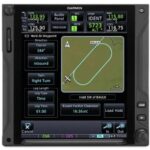
When paired with a compatible navigator such as a GTN Xi or compact Garmin IFR GPS, the GFC 500 can fly lateral and vertical guidance on many approaches, including LPV and ILS where available. It can also support coupled missed approaches in approved installations, helping you stay ahead of a high-workload phase of flight instead of hand-flying every detail.
Safety Tools: ESP, Underspeed/Overspeed and LVL
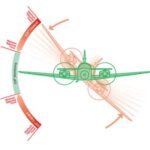
GFC 500 isn’t just about convenience. Garmin’s Electronic Stability & Protection (ESP) can gently nudge the aircraft back toward safe pitch, bank and airspeed ranges even when the autopilot is off, helping prevent a minor deviation from becoming a serious upset. Built-in underspeed and overspeed protection help you avoid stall or overspeed conditions in vertical modes, and the dedicated Level (LVL) button commands the system to return the aircraft to straight-and-level flight when you need a reset.

Smart Servos and Better Hand-Flying Feel
Traditional autopilot servos often rely on clutches or shear pins that wear, slip or break, leading to recurring maintenance. GFC 500 servos use brushless DC motors and internal monitoring to reduce wear and improve reliability, and they’re designed to decouple when the autopilot is off so you’re not fighting extra friction while hand-flying. That means smoother autopilot operation and more natural control feel when you’re flying manually.
How the GC 500 Helps Pilots
Safety & Reliability
- Uses solid-state attitude from a G5 or GI 275 instead of older mechanical gyros
- ESP, underspeed and overspeed protection help guard against loss of control
- LVL button gives you an instant “wings-level, pitch-stable” recovery command
- Smart servos reduce failure points found in many older autopilot designs
Workload & Consistency
- Handles headings, climbs, descents and procedure tracking so you can stay ahead of ATC
- Coupled approaches and missed approaches reduce last-second corrections near the ground
- Flight director cues (when used with G5 or GI 275) provide a clear “fly to the bars” picture whether the autopilot is engaged or not
Comfort & Long-Term Ownership
- Smoother control inputs can reduce passenger fatigue on long trips
- Optional pitch trim servo reduces workload further and keeps the airplane in trim
- Optional yaw damper (where supported) can improve ride quality and keep the ball centered
- Digital architecture and brushless servos are designed to reduce maintenance and downtime over the long term
The GFC 500 Works Great
with These Garmin Solutions
The best GFC 500 installations are part of a coordinated Garmin panel. Here are combinations we frequently recommend:
G5 or GI 275 for Attitude and HSI GFC 500 depends on a solid-state attitude source, typically a G5 or GI 275. These instruments provide the attitude and nav data the autopilot needs and give you a modern primary flight display to fly from, with flight director cues that match what the autopilot is doing.
GTN Xi Series Navigators With a GTN 650Xi or 750Xi as the IFR navigator, the GFC 500 can fly complex routings, hold entries and precision approaches with a high level of accuracy. Flight plans and procedure selections in the GTN Xi translate directly into autopilot guidance, so you’re not trying to make separate boxes agree with each other.
Compact IFR GPS Options (GPS 175, GNX 375, GNC 355) For aircraft that don’t need a full GTN, a compact Garmin IFR GPS can still provide lateral and vertical guidance for GFC 500 to follow. This can be a more budget-friendly way to gain fully coupled RNAV capability.
Pitch Trim, Yaw Damper and Future Upgrades In many aircraft, you can add an optional pitch trim servo so the autopilot automatically trims the airplane as it climbs or descends. In some models, a yaw damper can also be included for smoother ride quality. We’ll talk through which options are available and worthwhile for your specific aircraft and mission.
The CERTMAN IFR/VFR & Transponder Certifications After installation, we can coordinate the necessary IFR, VFR and transponder/pitot-static checks through The CERTMAN, so your GFC 500 and the rest of your avionics are properly documented and ready for real-world IFR flying.
Installed and Certified by
Top Flight Avionics and The CERTMAN
Top Flight Avionics has been working on avionics and autopilots in small aircraft for more than 35 years. Our first priority is always safety; our second is giving you an honest comparison between repairing what you have and stepping up to a system like the GFC 500.
For each GFC 500 project, we:
- Evaluate your current autopilot, servos and instruments to see what can be safely repaired
- Confirm that your aircraft qualifies for a GFC 500 installation and what options are approved
- Design a system layout that includes servos, wiring, attitude sources and navigators
- Install, configure and thoroughly test the autopilot in both ground and flight checks
Through The CERTMAN, we can also perform or coordinate IFR, VFR and transponder/pitot-static certifications, so your logbooks reflect the new system and its performance.
If you’re starting to question whether your current autopilot is helping or hurting, we’re happy to talk through the options and see whether a GFC 500 upgrade makes sense for how you actually fly.